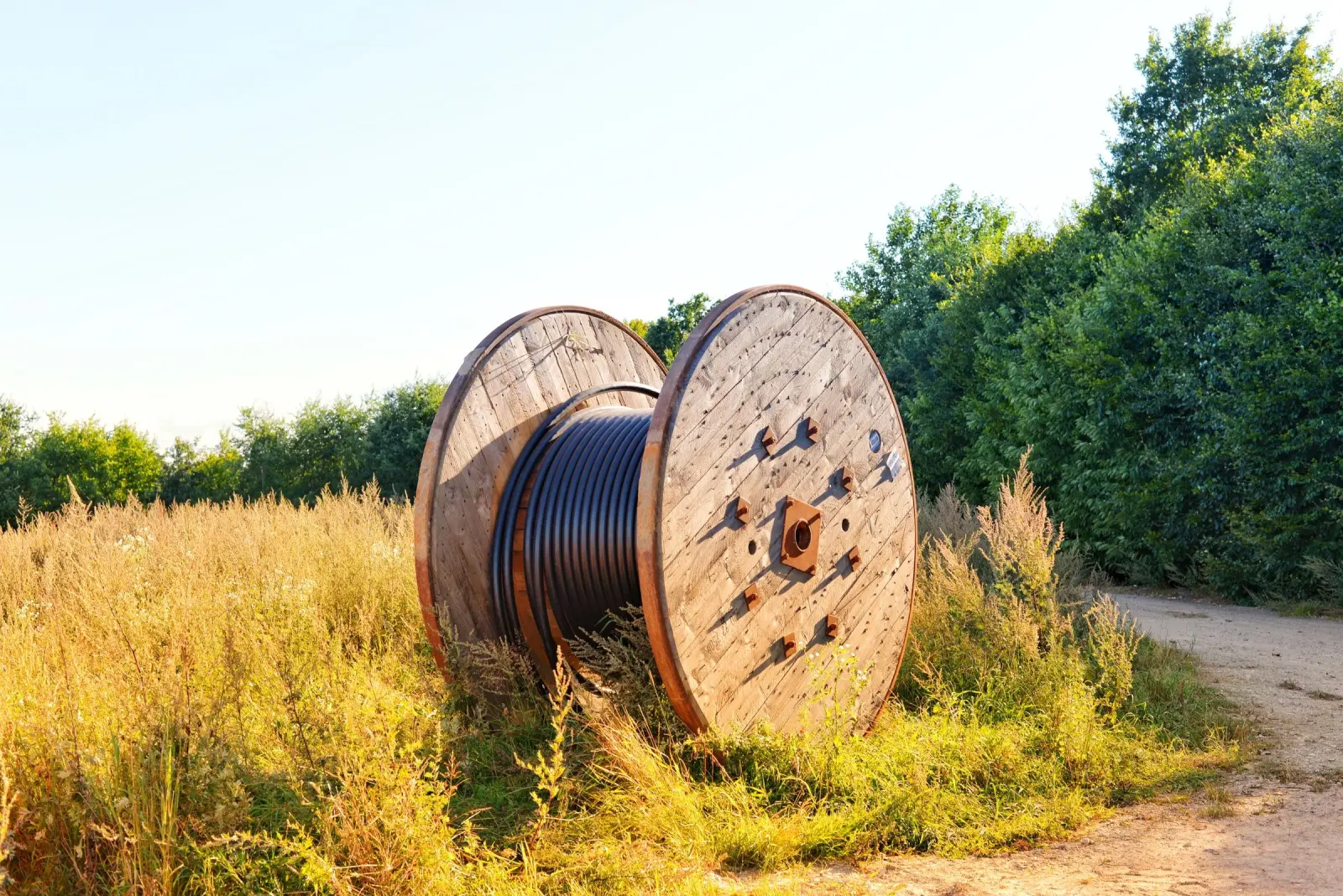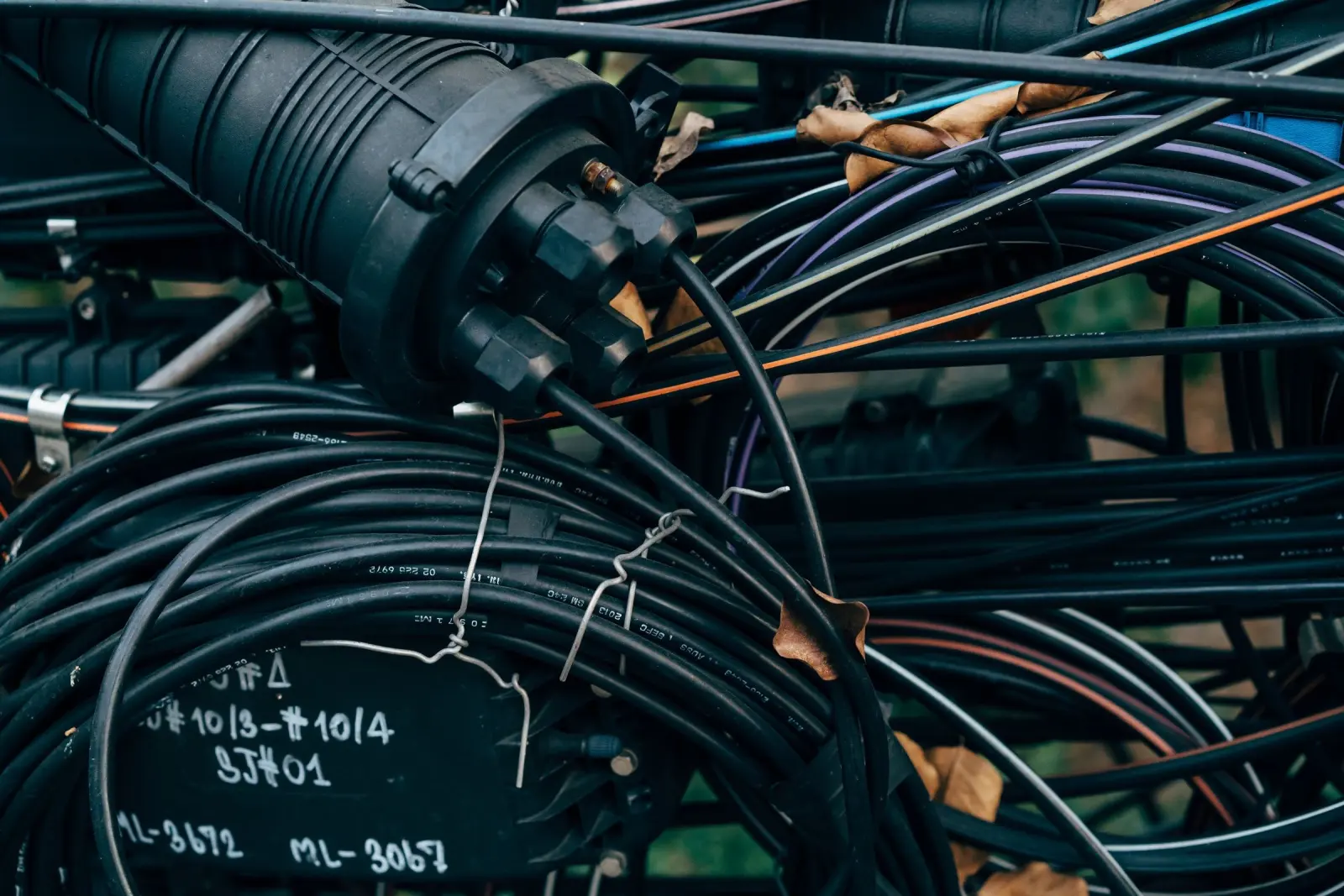
When someone in Damascus opens a website hosted in Europe, the data usually travels over two kinds of cable: submarine cables that cross the seabed between continents and countries, and terrestrial fiber routes that run under roads and between cities until they reach the user. Each has its own role, strengths and weaknesses. Understanding the difference is the key to understanding network resilience, and why countries invest in both.
Submarine cables: the backbone between continents
Submarine cables carry the overwhelming majority of international internet traffic. The figures vary slightly by source:
- The ITU says they carry approximately 99% of the world's internet traffic, with more than 500 active and planned systems as of 2024.
- The Internet Society counts 570 commercial cables carrying 97-98% of intercontinental traffic.
- TeleGeography says they carry over 99% of intercontinental traffic, while cautioning that a precise figure cannot be calculated.
The conclusion holds whatever the exact number: nothing else today can move data between continents at the capacity required.
Faults are routine
A cable cut can sound like a rare event. In reality it happens all the time:
- Citing the International Cable Protection Committee (ICPC), the ITU reports more than 170 cable repairs in 2025, or almost four cable failures a week, mostly caused by fishing and anchoring.
- The Internet Society estimates about 200 cable disruptions a year.
So a network's strength is not measured by whether faults happen, but by whether it keeps working when they do. The Internet Society warns that relying on a single route is "a recipe for disruption" and recommends redundancy through additional submarine paths or terrestrial links. One example it cites: in 2023 Bangladesh rerouted traffic over terrestrial links with India.
Terrestrial fiber: where land meets sea
Terrestrial cables do two jobs. First, they carry data inside a country, from the landing station on the coast to cities and data centers. Second, they can themselves form an international route crossing several countries overland, as in the corridors proposed between the Gulf and Europe.
That second role is growing. Fortune reports that Ooredoo's chief executive said the company cannot currently lay cables inside the Strait of Hormuz and is accelerating land-based infrastructure instead. Back in 2010, the Regional Cable Network (RCN) project was described as a high-capacity terrestrial structure, far more economical than submarine systems, according to Light Reading.
Terrestrial cables have weaknesses of their own, though: excavation, roadworks, theft and sabotage. Protecting them and documenting their routes matters as much as laying them.
A lesson from Syria: a subsea outage that happened on land
In June 2026 the Aletar cable linking Tartus and Alexandria went down. The striking detail, according to Kentik, is that the fault was not at sea but on land: a fiber cable sawed through inside a manhole. Traffic into Syria fell 22%, and some routes shifted to the transit providers CYTA, Orange Jordan and Telecom Italia Sparkle until service returned nearly 50 hours later.
Arab News reported that traffic was carried instead over the Ugarit cable to Cyprus and over a route through Turkey upgraded to 1 Tbps. In other words, having alternative routes, both subsea and overland, is what kept the outage from becoming total.
The new Tartus-Cyprus cable
The new Tartus-Cyprus cable (Ebla, also reported as UGARIT 2) will raise Syria's international capacity substantially. According to Submarine Networks, it is about 240 km long and repeaterless, with 24 fiber pairs, 31 Tbps of initial capacity and a design capacity of 370 Tbps, replacing the 1995 Ugarit cable.
Communications Minister Abdulsalam Haykal said Syria's international connectivity cannot rely on a single cable or route, and that SilkLink will distribute the capacity of new cables across the national backbone, according to SANA.
Why resilient countries combine both
The principle is simple: every route can fail, but several different routes failing at once is far less likely. Resilient networks therefore rely on:
- more than one submarine cable, ideally landing at more than one site;
- overland links with neighbouring countries that traffic can switch to;
- multiple internal routes between landing stations and cities, so one fault cannot isolate a whole station;
- fast repair capability, with trained crews, spare parts and precise route records.
What this means for building telecom infrastructure in Syria
Syria's experience shows that a new subsea cable is only as valuable as the terrestrial section that carries it inland. The Tartus landing station needs more than one fiber route into the backbone, the manholes along those routes need protection, and the routes themselves need documentation that lets crews find and fix a fault quickly.
At the same time, overland links with Jordan, Turkey, Lebanon and Iraq give Syria the chance to be a corridor between sea and land rather than just the end of a cable. At Alyaf Call we watch the terrestrial side in particular, because that is our field: trenching, cable deployment, splicing, testing and handover. To discuss your project, get in touch.